April 20, 2020
Written
by Alberta Parish
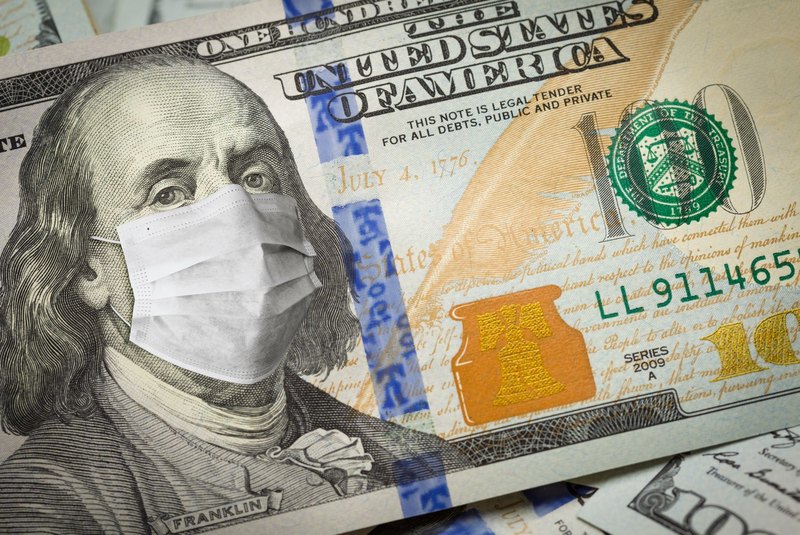 Before
the mandatory lockdowns began in the United States, people were going about
their daily routine, walking their dog in the park or dining in their favorite
restaurant. Many Americans had been on their jobs for years before the
coronavirus pandemic forced their jobs to shut down. Although people lived from
paycheck to paycheck, many never had to worry about food shortages or where their
next meal was coming from. Many never even had to apply for unemployment
benefits until businesses were forced to close due to COVID-19. Prior to the shelter-in-place
orders and social distancing measures, many took the little things in life for granted
like going to their parents’ house for dinner. When times are good, people tend
to be more relaxed and not think about what may happen in their immediate
future. They go about their daily lives taking everything in it for granted and
think this is the way life will always be for them. Many people often fail to take
into consideration that life could change suddenly without warning.
Before
the mandatory lockdowns began in the United States, people were going about
their daily routine, walking their dog in the park or dining in their favorite
restaurant. Many Americans had been on their jobs for years before the
coronavirus pandemic forced their jobs to shut down. Although people lived from
paycheck to paycheck, many never had to worry about food shortages or where their
next meal was coming from. Many never even had to apply for unemployment
benefits until businesses were forced to close due to COVID-19. Prior to the shelter-in-place
orders and social distancing measures, many took the little things in life for granted
like going to their parents’ house for dinner. When times are good, people tend
to be more relaxed and not think about what may happen in their immediate
future. They go about their daily lives taking everything in it for granted and
think this is the way life will always be for them. Many people often fail to take
into consideration that life could change suddenly without warning.
As
of April 20, over 41,000 people have died as a result of the pandemic. There
have also been reports of people with pre-existing health conditions such as
heart disease who, after entering the hospitals complaining of chest pain or respiratory
issues, are immediately isolated, put on a ventilator, given legal doses of morphine
and, days later, they die. The death certificate will list such persons as having
died from COVID-19 even if they were never tested for the virus.
In the
effort to slow down the spread of the virus, business owners around the country
began closing their doors in early March. Despite business closings, layoffs, and
social distancing guidelines, people continued to gather in public spaces, party
for birthday celebrations, attend church services, go to sporting events, beaches,
and national parks. Although bars, night clubs and restaurants were closed for
business, college students packed the beaches in Florida for spring break in mid-March.
Days later, CBS News reported that some students from the University of Tampa
had tested positive for the coronavirus. Even after NBA Commissioner Adam
Silver suspended the season when Utah Jazz player, Rudy Gobert, had tested
positive for the coronavirus on March 11, and the NCAA canceled March Madness,
many Americans still had not taken this pandemic seriously.
| Georgia Governor, Brian Kemp |
As
businesses were forced to close to curb the spread of the coronavirus, millions
of Americans have been laid off from their jobs. Many have also lost
their jobs. More than 22 million Americans have filed for unemployment benefits
since March. In response to the economic impact many people faced due to layoffs
and business closings, Congress passed the CARES Act which was signed into law
by President Trump on March 27, 2020. The CARES Act provided a one-time
stimulus payment of $1,200 for individual taxpayers who earned up to $75,000,
and married couples who earned up to $150,000, with an additional $500 per
child.
In
recent days, lawmakers have drafted a second stimulus check proposal which “would
provide Americans over the age of 16 with a $2,000 monthly check for up to 12
months.” According to a Forbes report, “The Emergency Money for the People Act,
proposed by Representatives Ro Khanna (D-CA) and Tim Ryan (D-OH), would expand
eligibility beyond those who were eligible for the CARES Act stimulus.” The
legislation also proposes the cancellation of rent and mortgage payments for a
year. Taxpayers who earn less than $130,000 annually would receive a monthly
check for $2,000. Married couples earning less than $260,000 would receive
$4,000. Parent(s) or guardian(s) would also receive an additional $500 per
child (up to three children).
Not
only would a second round of stimulus checks be good for the economy, but the
payments would also put money directly into the hands of many Americans who did
not meet eligibility requirements to receive stimulus checks under the CARES
Act. What would be more beneficial to Americans is legislation to pay every American,
age 17 and older, a universal basic income for life.
Despite
the benefits of a universal basic income, there will always be critics who will
argue that since the federal government is trillions of dollars in debt, it cannot
afford to keep printing new money and issuing checks to everyone. These same
critics will tell you that a universal basic income will never solve our
economic problems. The critics may also argue that people will quit their jobs or
not get a job. What do you care if someone quits his or her job? If they feel
they can maintain a household on a monthly check, so be it. But I believe many
Americans will continue earning extra income because many live above their
means already. Many Americans want the big house, the fancy car, or the latest
Gucci and Prada. And they often work ridiculously long hours just to afford a
four-bedroom home in a gated community or buy the latest Cadillac Escalade. A
universal basic income may not make you filthy rich, but it could be the answer
to economic inequality.
Will
a Universal Basic Income Solve Most Americans’ Economic Challenges?
No. But
a universal basic income could be the difference between you sleeping on someone’s
couch versus sleeping on your own couch or having your own place to live. It
could mean the difference between you and your family having food to eat versus
not having. In these economically challenging times, people who never stood in
lines at food banks prior to the COVID-19 pandemic are now relying on food
banks to feed themselves and their families. Some of these same individuals have
probably criticized others in the past for receiving food stamp benefits and
never thought they would one day be at a food bank relying on someone’s generosity.
Years ago, I learned that life is not always guaranteed to go the way you planned
for it. Nothing in life is guaranteed, especially a job, which is also why a universal
basic income would make up for any lack in income due to a job loss or layoff.
| Alaskans receive an annual dividend from this corporation. |
Since
1982, Alaska has paid state residents an annual dividend of $1,000 to $2,000. According
to the Business Insider, Alaska’s unemployment rate was around 7% in 2018 but
this had nothing to do with the annual payments. A state-wide recession had caused
the loss of thousands of oil and construction jobs. In addition, a 2018
research paper, co-authored by University of Chicago professor Damon Jones and
University of Pennsylvania professor Ioana Marinescu, revealed that “the
dividend had no effect on employment, and increased part-time work by 1.8
percentage points.”
Will
A Universal Basic Income Make Americans Quit their Job or Not Get a Job?
I
think a lot of people probably will quit their jobs if the universal basic income
far exceeds their earned income. However, I believe many people will also not
quit their jobs due to varying factors such as student loan debt, credit card debt,
mortgage note, car note/insurance, health insurance, children, etc. Furthermore,
a universal basic income will probably be just enough money for some people to make
their rent or mortgage payments depending on what part of the country in which they
reside. Places like California, New York, New Jersey, Nevada, etc. have very ridiculous
housing costs. A one-bedroom apartment in New York could cost you up to $3,000
monthly.
Funny
how over the course of a hundred and fifty-five years, the U.S. Government
could never find the money to pay Black people reparations. But Congress passes
the CARES Act which gave one-time stimulus payments to over 80 million Americans
last week. Instead of Congress proposing legislation for a second round of stimulus
payments, why not pass legislation for a universal basic income for every American?
A universal basic income is guaranteed money per month, which would not only solve
economic disparities in many parts of the country but also provide a safety net
just in case of an economic downtown, unforeseen event, or future job loss.
The End
Works
Cited
Judd, Wickert, & Bluestein. “One month
after warnings, Kemp puts Georgia on lockdown.” 2 April 2020. Web. 20 April
2020. The Atlanta Journal-Constitution.
Retrieved
from https://www.ajc.com/news/one-month-after-warnings-kemp-puts-georgia-lockdown/db6Aodv3LzftEV89WA1EOI/
LaBrecque, Leon. “The
CARES Act Has Passed: Here Are The Highlights.” 29 March 2020. Web. 20 April
2020. Forbes.
Retrieved
from https://www.forbes.com/sites/leonlabrecque/2020/03/29/the-cares-act-has-passed-here-are-the-highlights/#441f926968cd
Guina,
Ryan. “Will The $2,000 Monthly Stimulus Check Proposal Save Our Economy?” 20
April 2020. Web. 20 April 2020. Forbes.
Retrieved
from https://www.forbes.com/sites/ryanguina/2020/04/20/will-2000-monthly-stimulus-check-save-economy/#70befbe0638d
Feloni,
Richard. “Critics of universal basic income argue giving people money for
nothing discourages working — but a study of Alaska's 36-year-old program
suggests that's not the case.” 30 Oct. 2018. Web. 21 April 2020. Business
Insider.
Jones
and Marinescu. “The Labor Market Impacts of Universal and Permanent Cash
Transfers: Evidence from the Alaska Permanent Fund.” 2018 Feb. Revised 2020
Jan. Web. 21 April 2020. The National Bureau of Economic Research.
Retrieved
from https://www.nber.org/papers/w24312
O’Kane,
Caitlin. “Florida college students test positive for coronavirus after going
on spring break.” 23 March 2020. Web. 21 April 2020. CBS News.


No comments:
Post a Comment